Tempeh & Crisps
A fermented staple, sliced thin, becomes the snack that outlasts the trend.
Sari Handayani, Food scientistMalang, East Java, Indonesia

Sari Handayani grew up on tempeh fried thin as paper, sold by the bag at every corner. Years of lab work abroad later, Sari noticed that the protein bars on every shelf were chasing what that snack already did.
The idea was not to reinvent it, only to make it travel.
“Everyone abroad asked what the crunchy thing in my lunchbox was. Nobody had heard of it.”
Tempeh is soybeans bound together by a living culture. The fermentation does the work: it softens the beans, adds protein, and needs no factory, only warmth and a couple of days.
It is one of the lowest-impact proteins there is, and it has been made the same way for centuries.
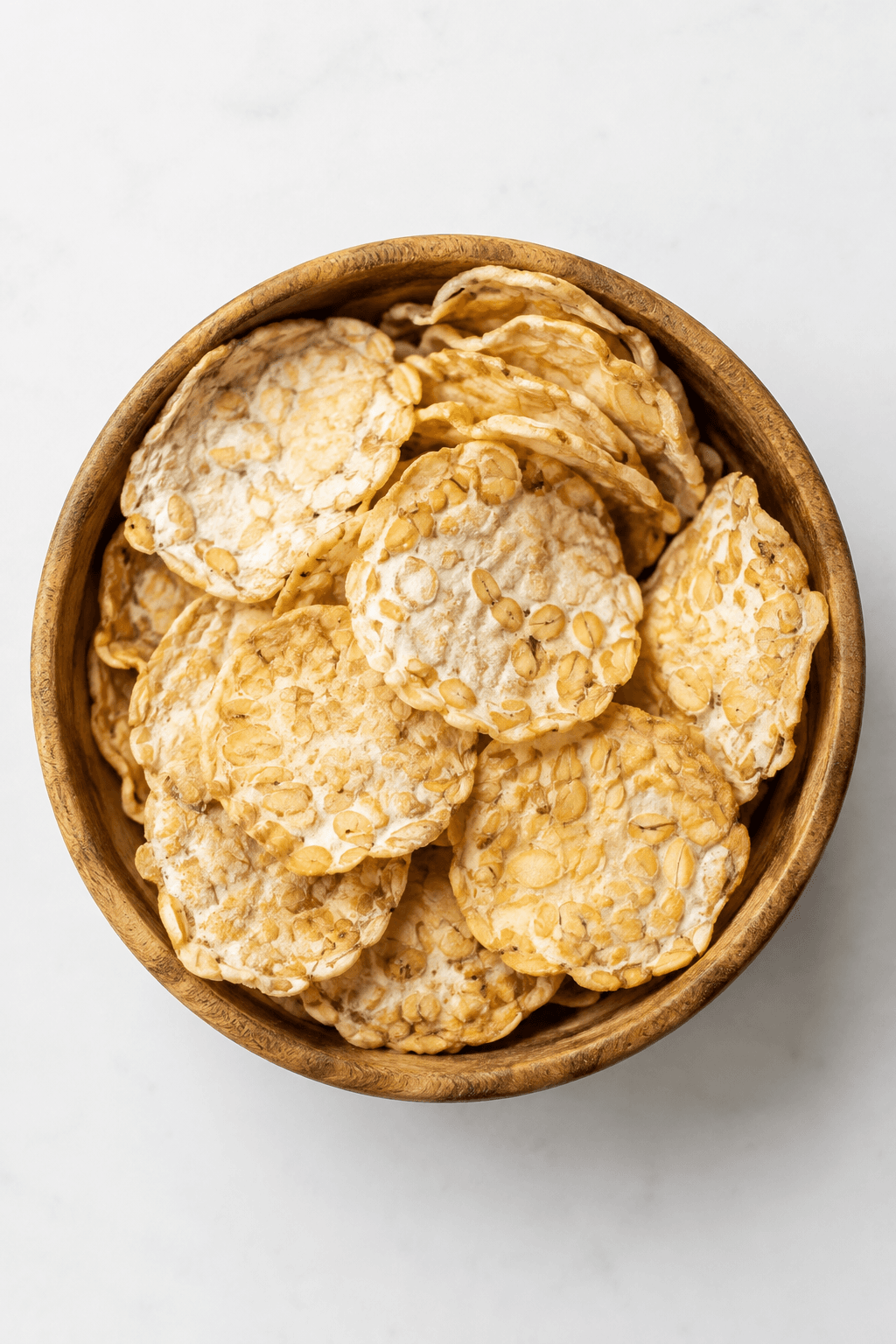
The crisps are sliced to two millimetres, lightly fried, and seasoned with nothing more than sea salt and a little lime leaf.
They keep for months without preservatives, which is exactly what made them worth exporting.