Plastic & Chair
Ten kilos of waste that never reached the sea, pressed into a seat you keep for decades.
Dimas Prasetyo, Industrial designerSurabaya, East Java, Indonesia

Dimas Prasetyo spent a decade designing packaging, the kind meant to be thrown away within a day. The turning point came on a walk along a river mouth at low tide, where the bank glittered with bottle caps in every colour.
The caps were the cleanest plastic there: dense, uniform, easy to sort. Within a year Dimas had left the studio job and rented a shed with a secondhand press.
“The river was carrying more bottle caps than fish. I wanted to give them somewhere better to go.”
Most plastic collected from rivers is never recycled. It is too mixed, too dirty, or worth too little to be sorted by hand. Caps are the exception, and a small network of collectors now sells them by the kilo instead of burning them.
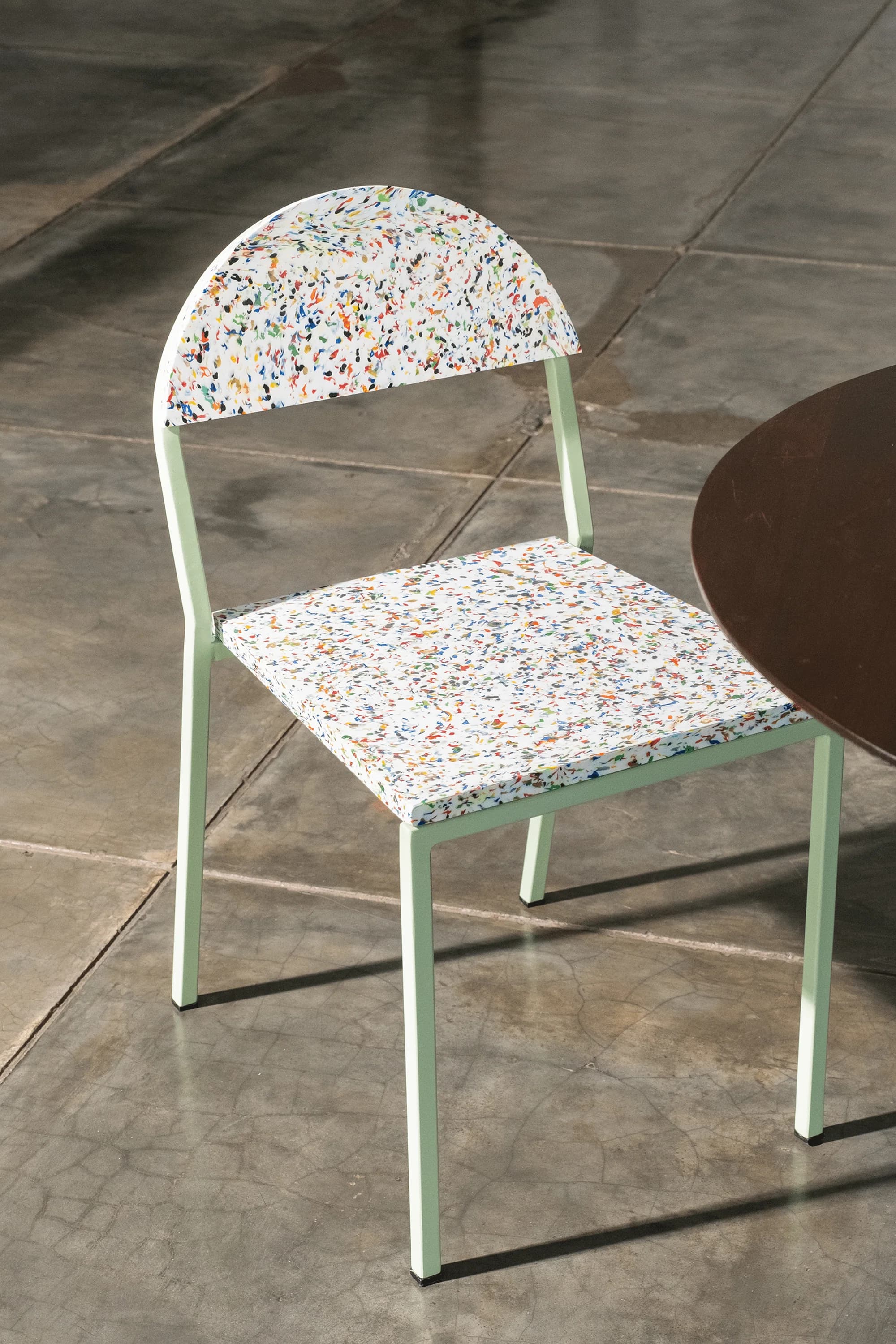
Each batch is washed, shredded, and sorted by colour. The speckle in every seat is simply whatever came in that week.
The Tide Chair is pressed from a single sheet, then bent and bolted without glue, so it can be taken apart and pressed again at the end of its life.
It stacks, it lives outdoors, and no two are speckled the same way.